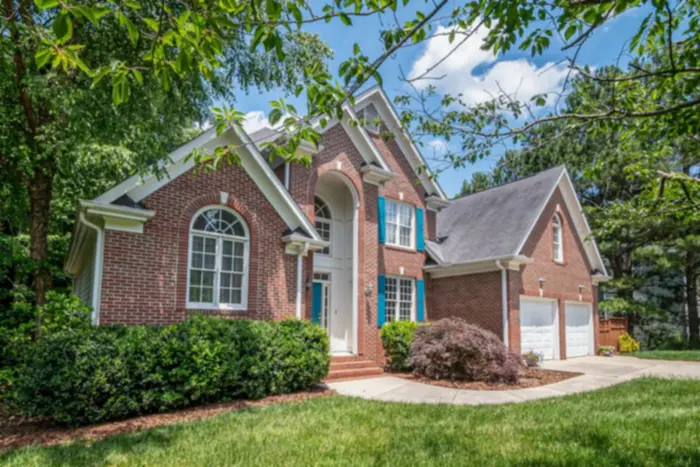
Tree disease and pest treatment in Cary, NC
Spotted leaves, sap oozing from the bark, a crown thinning from the top down: trees show stress in many ways, and the right treatment depends on finding the actual cause first.
- Diagnosis before any spraying or injection
- Bark beetles, scale insects and borers treated
- Cankers, root rots and leaf diseases identified
- Licensed pesticide application when treatment is needed
- Watering, mulching and soil care for stressed trees
Covering Cary · Apex · Holly Springs · Morrisville · Raleigh
Get an estimate for tree disease and pest treatment
Pruned to standard
Cuts made outside the branch collar, no topping and no more removed than the tree can spare, following ANSI A300 pruning standards.
Insured crews, safe rigging
Liability and workers compensation coverage, and limbs lowered on ropes rather than dropped when a roof, fence or garden is below.
A written, itemized price
Removal, stump grinding and cleanup priced separately in writing, so you know exactly what is included before work starts.
Why choose us
Trees handled safely, yards left clean
Most tree jobs here happen over a roof, a fence or a neighbor's yard. Careful rigging, proper pruning cuts and a thorough cleanup are what separate good tree work from a costly mess.
- Insured for tree work
- Limbs lowered, not dropped
- Pruning to ANSI A300
- Stump grinding available
- Written, itemized estimates
- Local to Cary
Diagnose before you treat
Most tree decline in the Triangle is driven by stress, not by a single disease: drought, root damage from construction, compacted soil, too much mulch piled on the trunk, or a tree planted too deep years ago. Insects and diseases often move in because the tree was already weakened. Spraying without a diagnosis wastes money at best and harms beneficial insects at worst. A proper diagnosis looks at the whole tree, its site and its history, and sometimes sends a sample to the NC State Plant Disease and Insect Clinic.
Common pests on Triangle trees
- Pine bark beetles. Ips engraver beetles attack stressed pines, and the southern pine beetle can kill healthy ones in outbreaks. Signs are pitch tubes on the bark and needles fading to red. Infested pines are removed; preventive treatment is sometimes used on high-value pines near an active infestation.
- Crape myrtle bark scale. An invasive scale insect found in North Carolina since 2016, now common in parts of Wake County. White felt-like scales and black sooty mold on the trunk are the signs; a spring soil drench is the usual treatment.
- Emerald ash borer. Confirmed in Wake County in 2015. It kills ash trees from the top down, leaving D-shaped exit holes. Systemic treatment protects valuable ash; untreated trees usually die within a few years.
- Scale, aphids and lace bugs on ornamental trees and shrubs, often controlled with targeted, low-impact treatments.
- Bagworms and tent caterpillars, mostly cosmetic on large trees but damaging on small evergreens.
Common diseases
- Hypoxylon canker shows up as patches of gray or brown crust where bark has sloughed off on oaks weakened by drought or root damage. It signals advanced decline, and affected trees usually need removal.
- Root and butt rots, including Ganoderma and Armillaria, decay the roots and lower trunk. Shelf-like conks or clusters of mushrooms at the base are the usual sign. See mushrooms at the base of a tree.
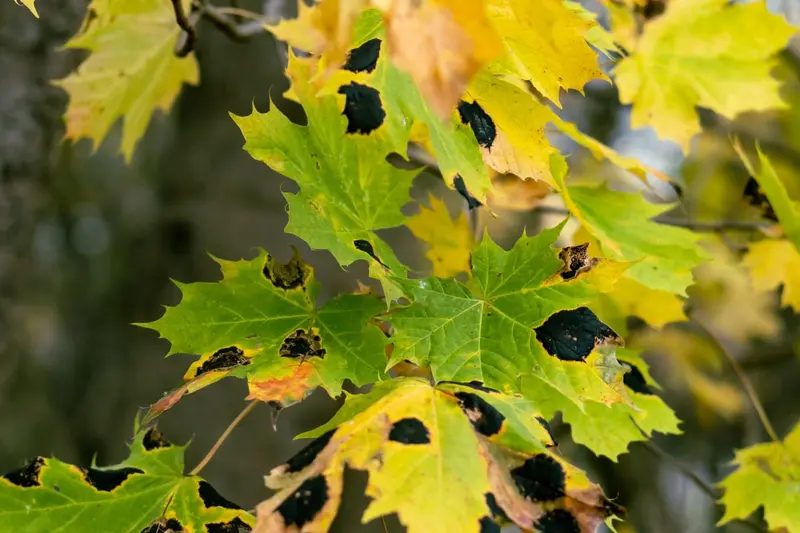
- Leaf spots and tar spot on maples, dogwoods and others look alarming in late summer but rarely threaten a healthy tree.
- Fire blight on Bradford pears and other relatives blackens shoot tips and can kill branches.
- Canker diseases on Leyland cypress, which cause brown, dying branches, especially on drought-stressed hedges.
How trees are treated
Treatment is matched to the problem and the tree’s value:
- Soil drenches and soil injections of systemic products, taken up through the roots.
- Trunk injections, which place a measured dose directly into the tree’s vascular system with little drift.
- Targeted sprays for leaf pests on smaller trees, timed to the insect’s life cycle.
- Pruning out infected branches, with tools cleaned between cuts for diseases that spread on blades.
- Removal when the tree cannot recover or has become a hazard or a source of infestation.
In North Carolina, applying pesticides on someone else’s property for hire requires a license from the state Department of Agriculture.
Helping a stressed tree recover
Often the most effective treatment is improving the tree’s growing conditions:
- Water deeply during drought, soaking the root zone slowly every week or two rather than sprinkling often.
- Mulch correctly: two to three inches over as much of the root zone as practical, pulled back from the trunk. Volcano mulching against the trunk invites rot and pests.
- Relieve compaction with air excavation and organic matter where heavy traffic has crushed the soil.
- Avoid fertilizing a stressed tree unless a soil test shows a deficiency.
- Remove dead wood so decay has fewer entry points; see tree trimming.
When treatment is not worth it
Some trees are not worth saving: a pine already killed by beetles, an oak with advanced Hypoxylon canker, a tree with root rot that has lost much of its anchorage. An arborist tree assessment weighs cost against the tree’s condition and value, and pine tree removal covers removing infested pines before beetles spread.
Tree disease and pest treatment — common questions
Are leaf spots on my tree serious?
Usually not. Most leaf spot diseases, such as tar spot on maples, look bad in late summer but do little harm to an otherwise healthy tree. Raking and removing fallen leaves helps. Diseases of the trunk and roots are far more serious.
Can a tree with root rot be saved?
Rarely, once decay is advanced. Root rots weaken a tree's anchorage before the crown shows much decline, so a tree with fungus at its base should be checked for stability rather than treated and left standing.
Does tree treatment have to be done by a licensed company?
In North Carolina, anyone applying pesticides to someone else's property for hire needs a pesticide applicator license from the state Department of Agriculture. Ask for the license number.
Is my ash tree at risk from emerald ash borer?
Likely. The beetle was confirmed in Wake County in 2015 and kills most untreated ash trees. Valuable ash trees can be protected with regular systemic treatments; declining ones are usually better removed before they become brittle.
Problems this fixes
Often booked with this