Preparing trees for hurricane season in the Triangle
Most trees that fall in Triangle storms had a weakness before the wind arrived: decay, a bad fork, damaged roots or a crown topped years ago. Hurricane season runs from June 1 to November 30, and the time to find those weaknesses is before it starts.
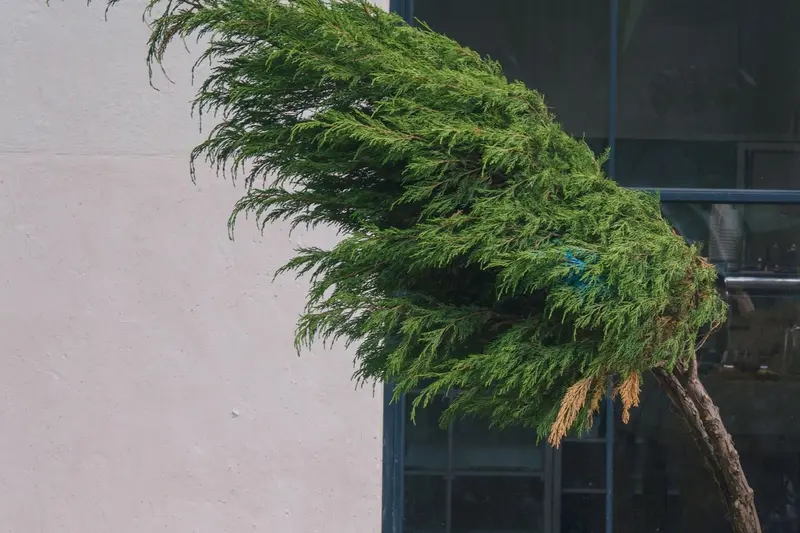
Storms that shaped Triangle trees
Hurricane Fran in September 1996 is still the benchmark here. It came ashore near Cape Fear and kept hurricane-force gusts deep inland, toppling trees across Raleigh, Cary and the surrounding towns onto houses, cars and power lines. Six years later, the ice storm of December 4 and 5, 2002 coated the Piedmont in a half inch to an inch of ice; a utility spokesman called it “Fran with ice,” and power was not fully restored for about ten days. The remnants of storms such as Matthew in 2016 and Florence in 2018 brought days of rain, and trees in saturated ground went over in winds that would not have moved them in a dry week.
Why trees fail in hurricanes
- Saturated clay. Tropical systems often bring inches of rain before the strongest wind, and wet clay lets whole root plates tip out of the ground.
- Decay in the trunk, the base or the roots, often hidden.
- Weak forks, especially V-shaped unions with bark trapped between the stems.
- Old topping cuts, which leave clusters of sprouts that are weakly attached and heavy.
- Root damage from construction, trenching or a new driveway.
- Newly exposed trees that grew up sheltered in a stand and lost their neighbors to clearing.
- Dense or overextended crowns that catch wind like a sail, including crowns carrying heavy vines.
Species matter too. University of Florida research after Gulf Coast hurricanes found laurel oak, water oak, pecan and sand pine among the least wind-resistant trees, while live oak, southern magnolia and American holly were among the most resistant. In Triangle yards, aging water oaks and Bradford pears are frequent early casualties.
A pre-season walk-around
In spring, walk the property with these questions:
- Which trees could reach the house? A tree can fall roughly its own height from its base, so note every tree within that distance of the house, the driveway and the neighbors’ homes.
- Is there dead wood in the crown, or a broken limb hanging in it?
- Are there cracks, cavities or fungi on the trunk or at the base? See cracked or hollow trunk.
- Has any tree started to lean, or is the soil cracked or lifted at its base?
- Do any pines show lightning scars, pitch tubes or browning?
- Are vines climbing into the crowns? See vines on trees.
- Are limbs close to the service line or other wires? Call the utility rather than cutting near them.
Photograph your trees while you are at it. Pictures of healthy trees taken before the season help show their condition if a claim is ever disputed.
Pruning that helps, and pruning that hurts
Done well, pre-season pruning lowers the odds of failure:
- Crown cleaning removes dead, broken and weakly attached branches.
- End-weight reduction shortens long, heavy limbs that reach over the house.
- Moderate thinning of very dense crowns lets wind pass through.
- Support systems hold weak forks together; see tree cabling and bracing.
Done badly, it makes trees more dangerous. Topping, lion-tailing and so-called hurricane cuts that strip a tree to a few bare limbs all leave weak regrowth and stressed trees. Avoid rushed, heavy cutting the week a storm is forecast, when crews are scarce and judgment is poor. Tree trimming describes proper pruning, and when to prune trees covers timing.
Pines and storms
Loblolly pines are the tallest trees on most Triangle lots, with their crowns concentrated at the top of a long trunk, and they are the trees homeowners worry about most. Healthy, well-rooted pines usually survive storms. The ones that snap or uproot tend to have damaged roots, decay, beetle attacks, lightning damage or a recent lean, or they stand alone after the trees around them were cleared. If a pine near the house has any of those, pine tree removal before the season is cheaper and safer than removal after it falls.
When removal is the right call
A tree with serious decay, a lean that is getting worse or major root damage within reach of the house is better taken down on your schedule than the storm’s. An arborist tree assessment sorts the trees that need work from those that need to go, and tree removal explains how trees near houses are taken down.
Getting ready for after the storm
- Save the number of a tree service you have already vetted; the guide to hiring a tree service covers what to check.
- Know how to report outages and downed lines to the utility.
- Read your policy’s deductibles and tree removal limits; the guide to fallen trees and insurance explains them.
- Leave chainsaw work on tangled, storm-damaged trees to trained crews. Injuries from untrained cutting climb after every big storm.
Hurricane tree prep — common questions
When should trees be pruned before hurricane season?
Late winter and spring, well before June, is ideal. Crews are easier to book than in late summer, and trees have time to respond before the busiest part of the season, from August through October.
Should I remove all the pine trees near my house?
Not automatically. Healthy, well-rooted pines often ride out storms, while pines with root damage, beetles, lightning scars or a new lean are the ones that fail. A tree-by-tree assessment costs less than clearing the yard.
Does thinning a tree make it more wind resistant?
Moderate, well-done thinning and end-weight reduction can help a dense or overextended tree. Over-thinning, stripping inner branches or topping does the opposite, leaving long, whippy limbs that break more easily.
What should I do with trees after a hurricane?
Stay away from downed wires and hanging limbs, photograph the damage, and call for help with anything on the house or blocking access. Then have standing trees checked for new leans, cracks and lifted roots before the next storm.
More tree care guides
Want a tree looked at?
Call and describe the tree and what you want done, or send the details and we will follow up.