Tree branches over the roof: risks and what to do
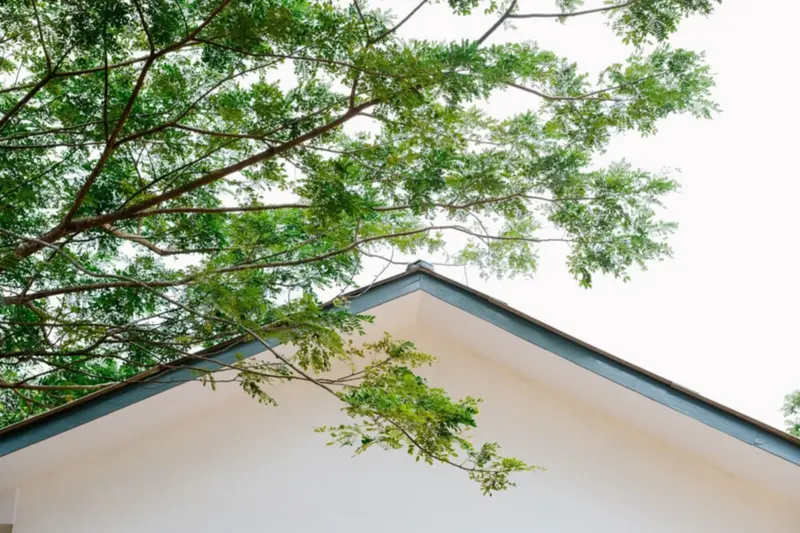
Branches that hang over a roof do slow damage every year and can do sudden damage in one storm. Most can be cut back without harming the tree, if the right limbs are chosen and the cuts are made well.
What you may notice
- Branches touching or sweeping across the shingles
- Gutters filling with leaves, needles and twigs
- Moss, algae or dark streaks on the shaded part of the roof
- Squirrels or rats running along limbs onto the roof
- Large limbs reaching over bedrooms or living areas
Tell us about the tree
Pruned to standard
Cuts made outside the branch collar, no topping and no more removed than the tree can spare, following ANSI A300 pruning standards.
Insured crews, safe rigging
Liability and workers compensation coverage, and limbs lowered on ropes rather than dropped when a roof, fence or garden is below.
A written, itemized price
Removal, stump grinding and cleanup priced separately in writing, so you know exactly what is included before work starts.
What overhanging branches do to a house
- Wear: branches that rest on the roof or sweep across it in wind scrub the protective granules off asphalt shingles, aging the roof early where they touch.
- Debris: leaves, needles, catkins and twigs pile up in valleys and gutters, holding water at the roof edge. Overflowing gutters soak the fascia and dump water next to the foundation.
- Shade: a roof that never dries in the sun grows moss and algae, and wet debris speeds up rot in the decking and trim.
- Animals: limbs act as bridges for squirrels, roof rats and raccoons to reach soffits, vents and the attic.
- Impact: a limb that breaks in a storm can punch through the decking, crack rafters and let in rain.
Signs the roof is already paying for it
Walk around the house after a dry spell and look up. Bare, darker patches on shingles under a branch tip mean the granules are gone. Shingle granules collecting in the gutters or at the bottom of the downspouts are another clue. Green moss or black streaks on the shaded side, soft or stained fascia boards, and gutters that overflow in every heavy rain all point to trees that sit too close. Inside, scratching in the attic at night, chewed vent screens or droppings near the eaves suggest animals are using the branches as a ladder.
Which branches matter most
Not every branch over the roof is urgent. Rank them roughly like this:
- Dead limbs over living space, especially bedrooms, which can fall without any warning.
- Long, heavy limbs that reach over the roof with most of their foliage near the tips.
- Branches touching the chimney, vents or the service line to the house.
- Limbs from weak-wooded trees such as water oaks and Bradford pears, which break more readily in storms.
- Branches that only drop leaves, which are a maintenance issue rather than a hazard.
Pines deserve a special mention in the Triangle. Tall loblolly pines often hold their crowns high above the roof, where they shed needles and cones year-round, and their lower limbs over a house are frequently dead and loose. A pine leaning toward the house is a bigger question than its branches.
Fixing it: trimming, limb removal or removal
Most overhanging branches can be dealt with by pruning. A pruning crew creates clearance by taking whole branches back to a junction, lowering each piece over the roof on ropes rather than letting it fall. The service pages explain the methods: tree limb removal for heavy limbs over the house, and tree trimming for clearance across the whole crown. When the only way to clear the house is to strip most of a tree’s crown, or the tree itself leans toward the roof or shows decay, tree removal is usually the more honest answer.
If the branches belong to a neighbor’s tree, talk with them before anyone cuts. The guide to fallen trees, insurance and neighbors explains how responsibility usually works.
Timing the work
Late winter is a good time for clearance pruning on most shade trees, because the structure is easy to see without leaves; the guide to when to prune trees covers the exceptions. Dead limbs over the house are worth removing as soon as you notice them, and it pays to schedule clearance before hurricane season, before a roof replacement and before gutter guards or solar panels are installed. Fast-growing trees close the gap again within a few years, so plan on a check every two to four years.
Branches over the roof — common questions
Should branches be cut back before a new roof goes on?
Yes. Doing the tree work first means no limbs are lowered over new shingles, and the roofer starts with clean valleys and gutters. Tell the tree crew about any skylights, vents or satellite dishes in the work area.
Are branches over the roof a problem for solar panels?
They can be. Shade cuts the panels' output, and leaves and needles collect under the panels where they hold moisture. Clearance pruning is best done before the panels go up, when the crew can work over the roof freely.
Do branches touching the house attract pests?
They give squirrels, roof rats and raccoons an easy route onto the roof and into soffits and vents, and carpenter ants travel along limbs that touch the siding. Keeping branches off the house removes the bridge.
Does homeowners insurance pay to trim branches over the roof?
No. Trimming is maintenance. Insurance generally pays only after a covered event, such as a limb falling on the roof in a storm, and an insurer may expect obvious hazards to have been dealt with beforehand.
Other tree problems
Not sure whether the tree is safe?
Call and describe the tree and what is near it, or send a few details and we will get back to you.