Tree roots damaging a driveway, sidewalk or foundation
Roots do not bore through solid concrete. They grow where soil is loose, moist and full of air, which is often right under a slab, and as they thicken each year they lift and crack whatever sits on top.
What you may notice
- Driveway or sidewalk slabs lifted or tilted near a tree
- Cracks running from a tree toward the pavement
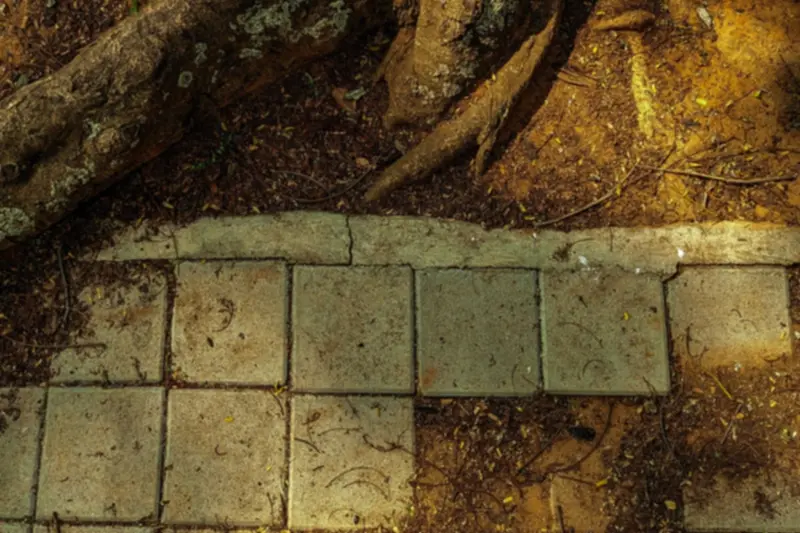
- Pavers or patio stones heaving above their neighbors
- Large surface roots crossing the lawn toward the house
- Slow drains or sewer backups near a big tree
Tell us about the tree
Pruned to standard
Cuts made outside the branch collar, no topping and no more removed than the tree can spare, following ANSI A300 pruning standards.
Insured crews, safe rigging
Liability and workers compensation coverage, and limbs lowered on ropes rather than dropped when a roof, fence or garden is below.
A written, itemized price
Removal, stump grinding and cleanup priced separately in writing, so you know exactly what is included before work starts.
Why roots end up under pavement
Most of a tree’s roots grow in the top foot or so of soil and spread well beyond the edge of the crown, often two to three times as far. Under a driveway or walk, moisture collects because the slab blocks evaporation, and the gravel base holds air, so roots find ideal conditions there. Each year they thicken, and the slab above rises, tilts and cracks. Shallow-rooted species such as willow oaks, red and silver maples, sweetgums and river birches are frequent offenders, especially in compacted clay, which keeps roots close to the surface.
Driveways, walks and patios
For pavement, the right fix depends on how big the roots are and how close they are to the tree:
- Replace or grind the lifted section and leave the root alone, when the root is large or close to the trunk.
- Work around the root: reroute a path, or rebuild a walk with a gentle rise, pavers on a sand base or flexible pavers that can be re-leveled as the root grows.
- Prune smaller roots far enough from the trunk with a clean cut, then add a root barrier before the new slab is poured.
- Remove the tree when the roots causing the damage are the same ones holding it up.
Foundations and pipes
Roots rarely crack a sound foundation by pushing on it. The more common concern in clay soil is moisture: a big, thirsty tree close to the house can dry the soil under a footing during a drought, contributing to settlement, and roots will grow into cracks that already exist. Sewer and drain lines are more vulnerable. Roots enter old clay or cast iron pipes through joints and cracks, drawn by moisture, and fill them until drains slow and back up. A plumber’s camera inspection shows where roots are getting in, and repairing or lining the pipe often solves the problem without losing the tree.
Cutting roots safely
Cutting roots is where well-meaning repairs go wrong. Large roots near the trunk anchor the tree, and severing them can leave it unstable in the next storm, sometimes years later as the cut roots decay. As a rough guide, many arborists avoid cutting major roots closer to the trunk than about three to five times the trunk’s diameter, and avoid cutting on more than one side of a tree at once. Cuts should be clean, made with a saw, rather than torn by an excavator bucket. An arborist tree assessment before a repair costs far less than a tree that falls after one.
When removal makes sense
Some trees and slabs can never coexist: a large shade tree planted three feet from a driveway will keep lifting it for as long as both are there. Removing that tree and planting a better-placed one is often the long-term fix. After tree removal, stump grinding clears the stump and the surface roots near it, while roots under the pavement are usually left to decay. Pavement over decaying roots can settle, so many homeowners repair the slab once the roots are gone. The tree care guide covers choosing where a replacement should go.
Building near trees
Most root conflicts are built in. When pouring a new driveway, walk or patio near a tree you want to keep, leave as much distance as possible, avoid cutting roots for the base, and consider a root barrier, permeable paving or a raised design that spans the roots. When planting new trees, giving them room from pavement according to their mature size, as described in tree planting, avoids the whole problem.
Roots damaging a driveway — common questions
Can I cut a tree root that is lifting my driveway?
Sometimes, but cutting a large root close to the trunk can destabilize the tree or open it to decay. Have an arborist look first. Small roots well away from the trunk can usually be cut cleanly; large structural roots near the trunk should not be.
Will tree roots damage my foundation?
Roots rarely break a sound foundation. In clay soil, a large tree close to the house can dry the soil enough to contribute to settlement, and roots will grow into existing cracks. Have foundation cracks checked before blaming the tree.
Who fixes a sidewalk lifted by a street tree?
Sidewalks and street trees in the public right-of-way are generally the town's to maintain, so report the damage to the town rather than cutting the roots yourself. Trees and walks on your own lot are yours.
Do root barriers work?
Vertical barriers installed along a driveway, walk or foundation can steer new roots deeper and away from the hardscape. They work best when installed at planting or during a repair, and they do not undo damage already done.
Other tree problems
Not sure whether the tree is safe?
Call and describe the tree and what is near it, or send a few details and we will get back to you.