Dead or dying tree: the signs and what to do
A tree can die slowly over several seasons or suddenly in one summer. Either way, a dead tree near a house becomes more brittle and more dangerous the longer it stands.
What you may notice
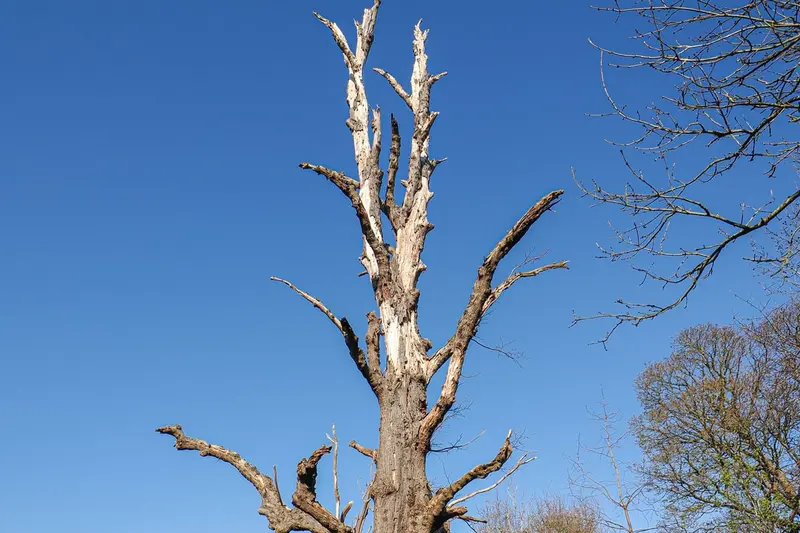
- No leaves in spring, or leaves that brown and drop in summer
- Bark falling away from the trunk or limbs
- Brittle twigs that snap instead of bend
- Large dead limbs in the upper crown
- Fungus, cavities or soft wood on the trunk
Tell us about the tree
Pruned to standard
Cuts made outside the branch collar, no topping and no more removed than the tree can spare, following ANSI A300 pruning standards.
Insured crews, safe rigging
Liability and workers compensation coverage, and limbs lowered on ropes rather than dropped when a roof, fence or garden is below.
A written, itemized price
Removal, stump grinding and cleanup priced separately in writing, so you know exactly what is included before work starts.
How to tell if a tree is dead or dying
- The scratch test: gently scrape a twig with a fingernail. Live twigs are green and moist underneath; dead ones are brown and dry.
- The bend test: live twigs bend; dead ones snap.
- Leaf-out: a tree that has not leafed out by late spring, while others of its kind have, is in serious trouble.
- Bark: bark peeling away in sheets, or falling off, often means the wood underneath has died.
- Dieback from the top: dead branches in the upper crown, with leaves only lower down, signal a tree in decline.
- Fungus: shelf-like conks on the trunk or mushrooms at the base point to internal decay.
- Holes and sawdust: woodpecker activity, borer holes and fine sawdust at the base suggest insects in dying wood.
A tree with part of its crown dead may still be saved with pruning and care. A tree that is mostly or entirely dead cannot.
Why trees die here
In the Triangle, the usual causes are drought, especially a hot, dry summer following years of stress; root damage from construction, trenching, grade changes or soil compaction; lightning, which strikes tall pines often; bark beetles in stressed pines; root rots; and age, particularly in shorter-lived species such as water oaks, Bradford pears and Leyland cypress. Trees planted too deep or with circling roots can decline for years before dying.
Dead trees get more dangerous with time
A living tree flexes in wind. A dead one dries out, decays and turns brittle, and its limbs and trunk can snap without warning in modest wind, or on a still day. Dead pines degrade particularly quickly: within a year or so of dying, they can be too unsound to climb. That also changes how the tree has to be removed. Crews cannot safely tie into or climb brittle wood, so they may need a bucket truck or a crane and more time. Removing a dead tree soon after it dies is usually safer and cheaper.
What to do about a dead tree
- Look at what it could hit. A dead tree in the back of a wooded lot is a lower priority than one leaning over the house, the driveway or the neighbor’s yard.
- Keep people out of its reach in windy weather if it stands near a play area or a path.
- Get it removed by a crew experienced with dead trees. Tree removal explains how trees near houses are taken down.
- Grind the stump if you want the space back; stump grinding covers it.
- Check the trees around it. Whatever killed one tree, whether drought, beetles, root damage or disease, may be affecting its neighbors.
Dead trees and liability
Trees on your property are your responsibility. If a dead tree you knew about, or should have noticed, falls on a neighbor’s house or car, you may be responsible for the damage, where a healthy tree felled by a storm would generally fall under each owner’s own insurance. Documentation helps: if you are worried about a neighbor’s dead tree, tell them in writing. The guide to fallen trees and insurance explains how this usually works.
Can a dying tree be saved?
Sometimes, if the cause is found early and less than about a third of the crown is affected. Watering through drought, removing the dead wood, correcting mulch piled against the trunk or treating a specific pest can help a tree recover. An arborist tree assessment tells you whether treatment is worth trying or whether the money is better spent on a replacement.
Dead or dying tree — common questions
How can I tell if my tree is dead or just dormant?
Scratch a small twig with a fingernail. Green, moist tissue under the bark means the twig is alive; brown and dry means it is dead. Check several twigs around the crown, and in winter, look for plump, healthy buds.
Is a dead tree dangerous?
More so every month it stands. Dead wood dries, decays and becomes brittle, so limbs fall in light wind and the trunk can fail without warning. Dead pines deteriorate especially fast.
Why does removing a dead tree cost more?
Brittle wood cannot be trusted to hold a climber or rigging, so crews often need a bucket truck or crane and more time to take it down safely. Removing a tree soon after it dies is usually cheaper.
Will the town remove a dead tree on my property?
No. Trees on private property are the owner's responsibility. Trees in the street right-of-way may belong to the town, so call the town about a dead tree between the sidewalk and the street.
Other tree problems
Not sure whether the tree is safe?
Call and describe the tree and what is near it, or send a few details and we will get back to you.