Tree care in Cary, NC: a homeowner's complete guide
Big trees are one of the best things about living in the Triangle, and one of the biggest liabilities when they are neglected. This guide pulls together what Cary-area homeowners need to know, from reading warning signs to choosing who climbs.
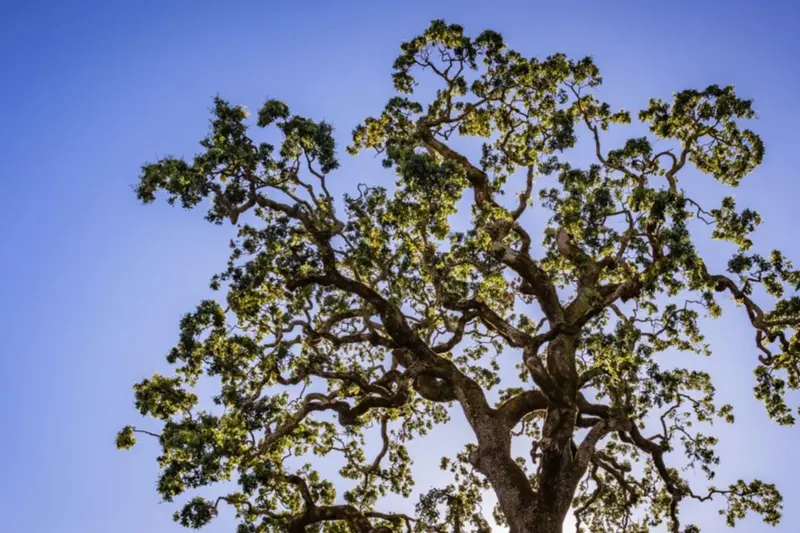
Trees and soils of the Triangle
Cary and its neighbors sit in North Carolina’s Piedmont, on red and yellow clay that holds water after long rains, compacts easily under equipment and keeps most tree roots in the top foot or so of soil. Many neighborhoods were built on old farm fields and pine stands, so a typical lot mixes tall loblolly pines that came up in those fields with hardwoods planted or saved when the houses went in. Older parts of Cary and Raleigh have big willow and water oaks along the streets, while newer subdivisions in Apex and Holly Springs often kept a few pines per lot, roots disturbed by grading. Hot, humid summers, occasional droughts, tropical storm remnants and the odd ice storm all test those trees.
What grows here, and what to watch
| Tree | Where you see it | Watch for |
|---|---|---|
| Loblolly pine | Almost every neighborhood | Bark beetles after drought, lightning, tall trees over roofs |
| Willow oak | Streets and older yards | Surface roots, heavy limbs, decay in old trees |
| Water oak | Older yards and wooded lots | Short life span, weak wood, trunk decay |
| Red maple | Yards and HOA plantings | Weak forks, surface roots |
| Sweetgum | Yards and wooded edges | Spiky seed balls, surface roots, root sprouts |
| Tulip poplar | Wooded lots | Great height, limbs that break in storms |
| Bradford pear | Older subdivisions | Splitting forks, invasive seedlings |
| Leyland cypress | Privacy screens | Canker diseases, outgrowing the space |
| Crape myrtle | Everywhere | Topping, crape myrtle bark scale |
A twice-a-year tree check
Walk the yard in summer and again in winter, and after any big storm. Each of these has its own page:
- A trunk that has started to lean, or leans more than it did: leaning tree.
- Bare limbs, peeling bark or no spring leaves: dead or dying tree.
- Limbs touching shingles or filling gutters: branches over the roof.
- Split forks, broken tops and hangers: storm-damaged tree.
- Mushrooms or conks at the base: mushrooms at the base of a tree.
- Slabs and pavers rising near a tree: roots damaging a driveway.
- A pine fading from green to red: pine tree turning brown.
- Seams, splits and cavities: cracked or hollow trunk.
- Limbs falling on calm days: tree dropping branches.
- Ivy or wisteria climbing into the crown: vines on trees.
Note what a tree could reach if it failed. A defect in a tree over the bedroom deserves faster attention than the same defect at the back of the lot.
Pruning that helps the tree
Good pruning follows the ANSI A300 standard: cuts made just outside the branch collar, no more removed in a year than the tree can spare, and no topping. Most mature trees need tree trimming every few years to clear deadwood and keep limbs off the house; heavy limbs over roofs and decks call for tree limb removal with rigging. Crape myrtles have their own rules, covered under crape myrtle pruning, and timing for every common species is in the guide to when to prune trees in North Carolina.
Keeping a valuable tree
Before deciding a big tree has to go, get an arborist tree assessment. A weak fork may only need tree cabling and bracing and some weight reduction. Insects and diseases are worth diagnosing early: crape myrtle bark scale reached North Carolina in 2016 and has spread in Wake County, emerald ash borer was confirmed in Wake County in 2015, and bark beetles follow every serious drought. Tree disease treatment starts with finding the real cause.
When a tree has to come down
Dead trees, trees with serious decay or root problems, and trees simply planted in the wrong spot are candidates for tree removal. Tall pines over houses are a specialty of their own, covered under pine tree removal. Stump grinding usually follows, and overgrown corners full of brush and invasive vines call for land clearing. Before scheduling, check the tree removal permit rules for your town and HOA, and read what drives tree removal cost so quotes make sense.
Storm season
Most trees that fail in storms had a weakness first. The guide to preparing trees for hurricane season lists what to check before June. When a tree does come down on the house, cars or driveway, emergency tree removal is the call, and the guide to fallen trees and insurance explains who usually pays.
A year of tree care in the Triangle
- Winter (December to February): prune most shade trees and crape myrtles, finish fall planting, and look over tree structure while the branches are bare.
- Spring (March to May): prune flowering trees right after they bloom, refresh mulch rings, and have weak forks, cables and leaning trees checked before storm season.
- Summer (June to August): water young trees through dry spells, watch pines for fading needles and pitch tubes, and look for bark scale on crape myrtles. Hurricane season begins June 1.
- Fall (September to November): the busiest stretch of storm season, the start of the best planting season in October, and a good time to remove deadwood and clean gutters as leaves drop.
When to call a professional right away
Some situations should not wait for the next scheduled visit:
- A tree that has started leaning, with cracked or lifted soil at its base.
- A split trunk or a large crack that is opening.
- A broken limb hanging in the crown over a roof, driveway or play area.
- A dead tree, or a large dead limb, within reach of the house.
- Branches resting on power lines or the service line to the house.
- Large mushrooms or conks at the base of a big tree near the house.
Roots, mulch and water
Most tree problems start underground, where no one looks:
- Mulch two to three inches deep in a wide ring, pulled back from the trunk, conserves water and keeps mowers away. Mulch piled against the bark does harm.
- Protect the root zone from parked vehicles, stacked materials, new soil and trenching; roots spread far beyond the branches.
- Water during drought, slowly and deeply, especially trees planted in the last few years.
- Skip the fertilizer unless a soil test shows a need; established trees in Triangle yards rarely require it.
Planting the next generation
Every removal is a chance to plant something better suited to the spot. Tree planting covers choosing natives and well-adapted species, giving them room from the house and pavement, and planting at the right depth. Fall is the best season here, and the NC Bradford Pear Bounty program has offered free native trees to homeowners who cut down Callery pears.
Hiring help
North Carolina does not license tree services, so checking insurance, credentials and the written scope falls to you. The guide to hiring a tree service covers what to ask, what a quote should include and the red flags that show up after storms.
Tree care guide — common questions
How often should trees near the house be inspected?
Look them over yourself twice a year, once in summer with the leaves on and once in winter when the structure is visible, and after every major storm. A professional assessment every few years makes sense for large trees that could reach the house.
How often do mature trees need pruning?
Most mature shade trees near houses benefit from pruning every three to five years to remove deadwood and maintain clearance. Young trees benefit from light structural pruning every year or two while their form is being set.
What are the most common trees in Cary-area yards?
Loblolly pines, willow oaks, red maples, sweetgums, tulip poplars, white and red oaks, river birches, crape myrtles, dogwoods and Leyland cypresses, along with many Bradford pears planted before their weaknesses were widely known.
Should I water my trees during a drought?
Yes, especially young trees and trees whose roots were damaged by construction. A slow, deep soaking over the root zone every week or two in a drought helps far more than frequent light sprinkling.
More tree care guides
Want a tree looked at?
Call and describe the tree and what you want done, or send the details and we will follow up.