Arborist tree assessment in Cary, NC
Before a healthy-looking tree is cut down, or a declining one is left standing over the house, it is worth an expert look. An assessment tells you what is wrong, how likely the tree is to fail and what it would hit.
- Tree risk assessment by trained arborists
- Decay, cracks, cavities and root problems checked
- Advice before construction near trees
- Written report with photos and options
- Second opinion before an expensive removal
Covering Cary · Apex · Holly Springs · Morrisville · Raleigh
Get an estimate for arborist tree assessment
Pruned to standard
Cuts made outside the branch collar, no topping and no more removed than the tree can spare, following ANSI A300 pruning standards.
Insured crews, safe rigging
Liability and workers compensation coverage, and limbs lowered on ropes rather than dropped when a roof, fence or garden is below.
A written, itemized price
Removal, stump grinding and cleanup priced separately in writing, so you know exactly what is included before work starts.
Why choose us
Trees handled safely, yards left clean
Most tree jobs here happen over a roof, a fence or a neighbor's yard. Careful rigging, proper pruning cuts and a thorough cleanup are what separate good tree work from a costly mess.
- Insured for tree work
- Limbs lowered, not dropped
- Pruning to ANSI A300
- Stump grinding available
- Written, itemized estimates
- Local to Cary
When to get a tree assessed
- A large tree near the house has a defect you are worried about: a crack, a cavity, mushrooms at the base or a lean.
- A tree has started dropping limbs or thinning in the crown.
- You are planning construction, a driveway, a pool or an addition near trees you want to keep.
- A storm damaged a tree and you need to know whether it can be saved.
- You are buying a house with big trees close to it.
- Neighbors disagree about a tree, or an HOA needs documentation before approving a removal.
- You have been told a tree must come down and want a second opinion.
What a tree risk assessment looks at
A basic assessment starts with the tree as a whole and the site around it. The arborist looks at the crown for dieback, dead limbs and thinning; the branch structure for weak forks with bark trapped between the stems; the trunk for cracks, cavities, cankers, seams and fungal growth; and the root zone for lifted soil, cut or girdled roots, fungi and signs of construction damage. Just as important is the target: what the tree or its limbs would hit if they failed, how often people are there, and what the consequences would be. Many arborists who do this work hold the ISA’s Tree Risk Assessment Qualification, which trains them in a standard method.
Tools for looking inside a tree
Decay is often hidden. Arborists use a few methods to see how much sound wood is left:
- Sounding the trunk with a mallet, where a hollow tone suggests decay or a cavity.
- A probe into openings and cavities to measure their depth.
- Resistance drilling, which pushes a thin needle into the wood and records how easily it passes through.
- Sonic tomography, which times sound waves through the trunk to map decay in cross-section.
The more advanced methods are used when a valuable tree is borderline and the decision is expensive either way.
What you get
A useful assessment ends with options rather than just a verdict: the defects found, how serious they are, and what can be done about each, such as removing a weak limb, reducing the crown, installing cabling and bracing, treating a disease, or removing the tree. For an HOA, an insurer or a real estate transaction, ask for the findings in writing with photos.
Getting the most from the visit
Before the arborist arrives, list the trees you are worried about and what worries you about each, along with anything that has changed: new cracks, a recent lean, limbs that have fallen or construction nearby. Mention past storm damage, old pruning and any treatments. That history helps the arborist see more than a walk-around alone would show.
Trees and construction
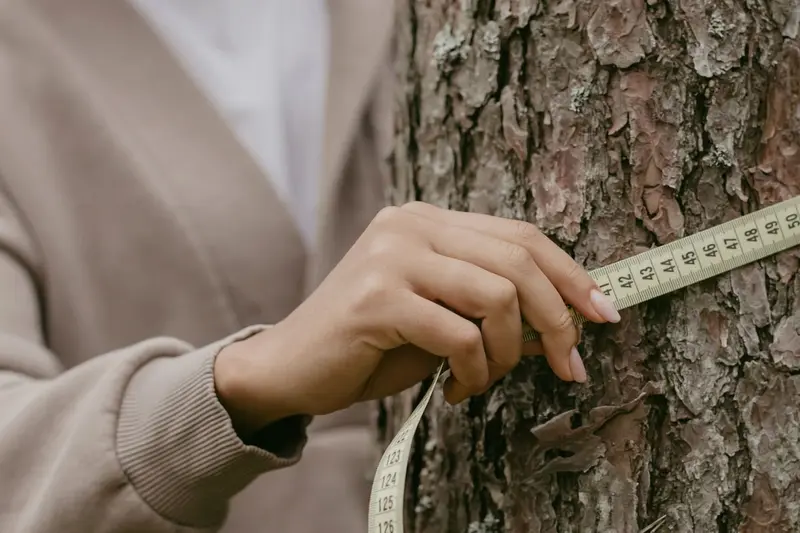
Construction kills more established trees in growing towns than storms do, often slowly. Most of a tree’s roots are in the top foot or two of soil and spread well past the edge of the crown. Trenching for utilities, adding fill over the root zone, lowering the grade and driving heavy equipment across it all damage roots, and the tree may decline over the following three to seven years. A common rule of thumb protects a radius of about a foot to a foot and a half for every inch of trunk diameter. An arborist can mark that zone, recommend fencing and help route work around the most important roots before the first machine arrives.
Credentials and independence
North Carolina does not license arborists or tree services, so credentials are voluntary. Look for an ISA Certified Arborist, and for tree risk work, the Tree Risk Assessment Qualification. Some homeowners prefer a consulting arborist who does not sell removal or pruning, so the advice has no stake in the outcome. The guide to hiring a tree service covers what to ask.
Arborist tree assessment — common questions
What is an ISA Certified Arborist?
An arborist who has passed the International Society of Arboriculture's certification exam and keeps up with continuing education. North Carolina does not license arborists, so certification is the main credential to look for.
Can an arborist tell if a tree is going to fall?
No one can predict exactly when a tree will fail. A risk assessment estimates how likely failure is within a time frame, how likely the tree is to hit something, and what the consequences would be, so you can decide what to do.
Do I need an assessment before removing a tree?
Not when a tree is clearly dead or dangerous. It is worth it when a large, valuable tree might be saved with pruning or cabling, when neighbors disagree, or when you need documentation for insurance, an HOA or a home sale.
Can an arborist help protect trees during construction?
Yes, and it is the best time to call. Protecting the root zone with fencing, routing trenches around roots and avoiding grade changes is far cheaper than removing a tree that declines a few years after the work.
Problems this fixes
Often booked with this