When to prune trees in North Carolina
For most trees in the Triangle, late winter is the best time to prune. Flowering trees, pines and a few sap bleeders have their own timing, and dead or dangerous limbs should never wait for a season.
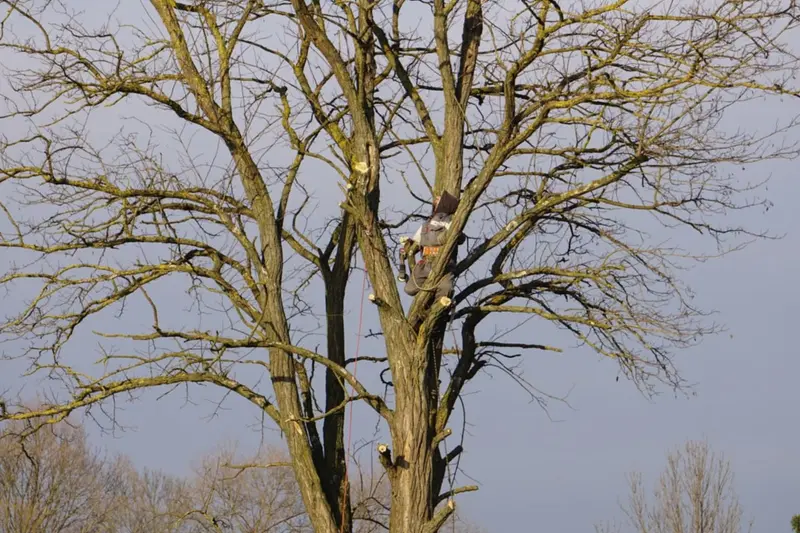
The general rule: late winter
From about January into early March, most deciduous trees in the Triangle are dormant, and that is when the majority of pruning should happen:
- The structure is visible. Without leaves, it is easy to see crossing limbs, weak forks and deadwood.
- Wounds close quickly. Cuts made just before spring growth begin closing as soon as the tree wakes up.
- Fewer pests and diseases are active, so fresh wounds are less likely to be invaded.
- Less stress. The tree has its full reserves stored in the roots and wood.
- Easier on the yard. Lighter crowns and firm or dry ground mean less mess and fewer ruts.
A season-by-season calendar
| Season | Good for | Hold off on |
|---|---|---|
| Late winter (Jan to early Mar) | Structural and clearance pruning on most shade trees, crape myrtles, fruit trees and pines | Spring bloomers, if you want this year’s flowers |
| Spring (Mar to May) | Flowering trees right after bloom; deadwood | Heavy pruning while leaves are expanding |
| Summer (Jun to Aug) | Light pruning, deadwood, raising low limbs, maples and birches | Heavy cuts in heat and drought; pruning pines |
| Fall (Sep to Dec) | Deadwood removal | Major pruning before winter |
Species by species
| Tree | Best time | Why |
|---|---|---|
| Oaks | Late winter | Structure is easy to see; avoid heavy cuts during spring leaf-out |
| Maples and river birch | Late winter or midsummer | They bleed sap after late-winter cuts, which is harmless |
| Crape myrtle | Late winter, before new growth | Flowers form on new wood |
| Dogwood, redbud, cherry, serviceberry | Right after flowering | Winter pruning removes this spring’s flower buds |
| Southern magnolia | Late spring to early summer, after the main bloom | Responds poorly to heavy pruning; low limbs can stay |
| Pines | Late fall through winter | Fresh resin in warm months can attract bark beetles |
| Leyland cypress and junipers | Late winter to early spring | Cuts into bare, needleless wood rarely regrow |
| Hollies | Winter | Cut branches make holiday greenery |
| Bradford pear | Late winter | Pruning while dormant limits the spread of fire blight |
| Fruit trees | Late winter, before buds break | Shapes the tree and the crop |
Dead, broken and dangerous limbs: any time
Seasonal timing applies to live wood. A dead limb over the driveway, a branch cracked by a storm or a hanger caught in the crown should come out as soon as it is noticed, in any month. Removing dead wood does not stress a tree, and leaving a hazard in place to wait for the ideal season makes no sense.
How much to remove
Timing matters less than the amount taken. Young, vigorous trees tolerate removal of up to about a quarter of their live crown in a season; mature and stressed trees should lose much less. Two habits do lasting damage no matter when they happen: topping, which cuts through limbs to shorten a tree, and lion-tailing, which strips the inner branches and leaves foliage only at the tips. Tree trimming covers the cuts a good crew makes.
Do pruning cuts need paint?
No. Studies of wound dressings found they do not stop decay and can trap moisture against the wood. A cut made in the right place, just outside the branch collar, closes on its own as the tree grows a ring of new wood over it.
Nesting birds
Spring and early summer pruning can disturb nesting birds. Look for active nests before cutting, especially in dense evergreens and hedges; most native birds and their active nests are protected by federal law, which is one more reason to do major pruning in late winter.
Pruning young trees
The cheapest pruning a tree will ever get is in its first few years. Light structural pruning every year or two, choosing one central leader, removing competing stems and spacing out the main limbs, prevents the weak forks that split decades later. Small cuts on young trees close quickly. If you are planting, tree planting explains how to start a tree off right.
Crape myrtles
Crape myrtles are pruned in late winter, typically February into early March in the Triangle, before new growth starts. Light shaping and removing suckers, crossing branches and seed heads is all most need. Cutting the trunks back to stubs, often called crape murder, weakens the plant and produces floppy sprouts. Crape myrtle pruning covers the details.
Before storm season
Pruning that reduces storm risk, such as removing deadwood and shortening long, heavy limbs over the house, is best finished in late winter or spring, before hurricane season begins on June 1. Crews are easier to book then, and trees have time to adjust. The guide to preparing trees for hurricane season covers what to check.
Trees near power lines
Duke Energy prunes trees along its distribution lines on its own schedule. Pruning near energized lines is work for line-clearance qualified crews only, whatever the season. For the service line to your house, arrange a disconnect with the utility before any pruning starts.
When to prune trees — common questions
Is it bad to prune trees in the summer?
Not for light pruning. Summer is a fine time to remove deadwood, raise low limbs or slow down a vigorous tree, and some trees that bleed sap in spring are better pruned then. Avoid heavy pruning during heat and drought.
Why should I avoid pruning in the fall?
Pruning in late summer and early fall can push tender new growth that will not harden before frost, and many decay fungi release spores in fall while wounds close slowly. Light deadwood removal is fine; save major cuts for late winter.
Do maples need to be pruned at a special time?
Maples and birches bleed sap when cut in late winter and early spring. It looks alarming but does not harm the tree. If it bothers you, prune them in summer after the leaves are fully out.
Can I prune a tree while it is flowering?
You can, but you give up the flowers you cut. For spring bloomers such as dogwood and redbud, the best time is right after the flowers fade, before next year's buds form.
More tree care guides
Want a tree looked at?
Call and describe the tree and what you want done, or send the details and we will follow up.