Mushrooms at the base of a tree: what they mean
Mushrooms are the fruit of a fungus that is already living in the wood or the soil. Some are harmless; others are the only visible sign of rot that is weakening the roots or the base of the trunk.
What you may notice
- Mushrooms in a ring or cluster around the trunk
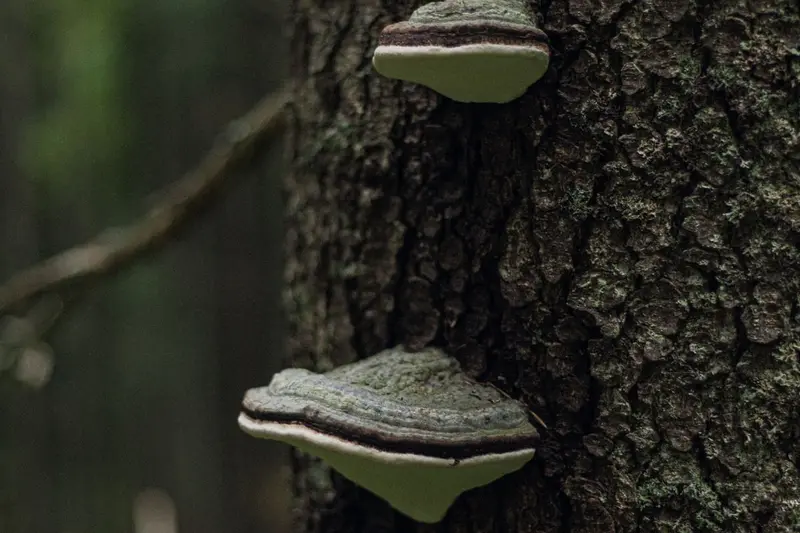
- Hard, shelf-like brackets (conks) on the lower trunk or roots
- Soft, crumbly or spongy wood at the base
- A thinning crown or dieback on the same tree
- Cracks, cavities or a lean along with the fungus
Tell us about the tree
Pruned to standard
Cuts made outside the branch collar, no topping and no more removed than the tree can spare, following ANSI A300 pruning standards.
Insured crews, safe rigging
Liability and workers compensation coverage, and limbs lowered on ropes rather than dropped when a roof, fence or garden is below.
A written, itemized price
Removal, stump grinding and cleanup priced separately in writing, so you know exactly what is included before work starts.
Why fungi at the base matter
The base of the trunk and the large roots around it carry the full weight of the tree and the force of every gust. Decay there, called butt rot or root rot, can consume the wood that holds the tree up while the crown still looks green and healthy. By the time a conk or a cluster of mushrooms appears, the fungus has often been at work for years. That is why fungi at the root flare deserve more attention than those on a dead branch or in the lawn, and why trees with root rot sometimes fall over on calm days, roots and all.
Common decay fungi in Triangle yards
- Ganoderma: reddish-brown shelves with a shiny, varnished look at the base of oaks, maples and other hardwoods, causing a white rot of the roots and lower trunk.
- Armillaria (honey mushroom): clusters of honey-colored mushrooms around the base in fall, with white, fan-shaped sheets of fungus under the bark and black, shoestring-like strands in the soil.
- Dyer’s polypore: a velvety rosette, mustard yellow to rust brown, at or near the base of pines and other conifers, causing a brown, cubical rot in the roots and butt.
- Hen of the woods: a large gray-brown cluster of overlapping caps at the foot of oaks, a sign of root and butt rot.
- Chicken of the woods: bright orange-and-yellow shelves on oaks and other hardwoods, linked to a brown rot inside the trunk.
- Brackets higher up: hard, woody conks on the trunk or limbs mark decay at that spot.
Identification matters because fungi differ in how fast they rot wood and which part of the tree they attack. Photos of the top and underside of the mushroom, and of where it attaches, make the job easier.
Mushrooms that are no cause for alarm
After warm, wet weather, mushrooms pop up in lawns and mulch beds all over the Triangle, breaking down wood chips, buried construction debris, old roots and stumps. Some species live in partnership with tree roots, trading nutrients for sugars, and their mushrooms in the lawn under a healthy oak or pine are a good sign. A mushroom a few feet out in the grass is very different from a conk growing out of the trunk or a large surface root.
What makes rot worse
Root and butt rots often start where roots were wounded or stressed:
- Trenching, grade changes and soil compaction during construction.
- Mower and string trimmer wounds at the base of the trunk.
- Mulch or soil piled against the trunk, which keeps the bark wet.
- Poorly drained clay, or irrigation spraying the trunk day after day.
- Drought, which weakens a tree’s defenses against fungi.
What an arborist checks
An arborist tree assessment starts by identifying the fungus, then estimates how much sound wood is left. Where the root flare is buried under soil or mulch, the arborist may uncover it, sometimes with a compressed-air tool that clears soil without cutting roots, to see the main roots directly. The tree’s size and lean, the extent of the decay and what the tree would hit if it failed shape the recommendation.
Your options
- Monitor: a large tree with limited decay and nothing important within reach may only need a yearly check.
- Reduce the load: pruning to lighten the crown lowers the stress on weakened roots.
- Improve conditions: pulling mulch back from the trunk, fixing drainage and protecting the root zone slow some rots, though none can be cured. Tree disease treatment covers what can help.
- Remove: extensive root or butt rot in a tree that could hit the house is one of the most common reasons for tree removal, and it should not wait for the next storm.
Mushrooms at the base of a tree — common questions
Should I knock the mushrooms off my tree?
Removing them does no harm and no good. The mushroom or conk is only the fruiting body; the fungus itself is inside the wood or roots and keeps growing. Take a photo first, because the shape and color help identify the fungus.
How long can a tree with butt rot stand?
Anywhere from a few seasons to decades, depending on the fungus, the species and how much sound wood remains. Some slow rots allow a long life, while aggressive root rots can bring a tree down with little warning, which is why an assessment matters.
Are mushrooms in the mulch around a tree a problem?
Usually not. Many mushrooms in mulch and lawns are breaking down wood chips, old roots or buried debris, and some are beneficial partners of the tree's roots. Fungi growing from the trunk or the root flare are the ones to have checked.
Can root rot spread to other trees?
Some root rot fungi spread through root contact or the soil, and Armillaria travels between roots with dark, shoestring-like strands. Avoid planting a susceptible tree where an infected one stood unless the stump and major roots are ground out.
Other tree problems
Not sure whether the tree is safe?
Call and describe the tree and what is near it, or send a few details and we will get back to you.