Tree fell on your house? Insurance and neighbor rules
Who pays when a tree falls usually depends less on whose tree it was than on what it hit and why it fell. A healthy tree blown over in a storm is treated very differently from a dead tree that the owner ignored.
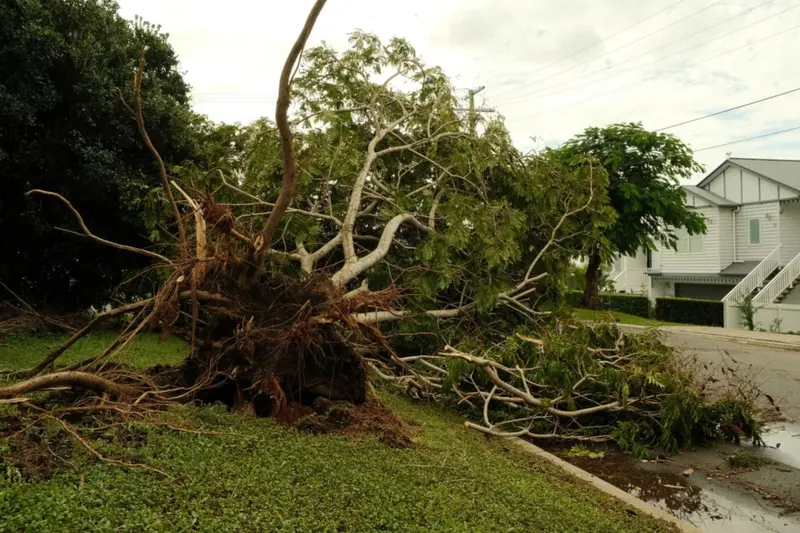
First steps after a tree falls
- Get everyone clear of the tree, any wires and any part of the house that is open or sagging. Call the utility about wires and the gas company if you smell gas.
- Document it. Take photos and video from several angles before anything is moved, including the base of the tree, the stump or root plate, and everything it hit.
- Call your insurer or agent to open a claim and ask what they need.
- Prevent further damage. Policies expect reasonable steps such as removing the tree from the roof and tarping it. Keep every receipt.
- Ask for itemized invoices that separate removing the tree from the house, cleaning up the yard and grinding the stump, because insurers treat those differently.
What homeowners insurance usually covers
Standard homeowners policies cover damage from a tree that falls because of a covered peril, such as wind, lightning, hail or the weight of ice and snow:
- The house and other structures, including a detached garage, a shed or a fence.
- Belongings inside that were damaged.
- Removing the tree from the structure, typically subject to a removal limit.
- Additional living expenses if the house cannot be lived in during repairs.
- Removal of trees that hit nothing but block the driveway or a wheelchair ramp, under many policies.
Many policies cap tree removal at around $500 per tree and $1,000 per storm, and some insurers offer higher limits. Your deductible applies, and some policies have a separate wind or named-storm deductible figured as a percentage of the dwelling coverage rather than a flat amount. Read your declarations page before storm season.
What it usually does not cover
- Removing a tree that fell in the yard without damaging a covered structure or blocking access.
- Removing standing trees, dead or alive, before they fall.
- Trees killed by insects, disease, drought or neglect.
- Replacing the tree itself after wind damage; the standard coverage for trees and plants applies to perils such as fire, lightning and vandalism rather than windstorms.
- Flood damage, which needs a separate flood policy.
- Grinding the stump.
Whose tree, whose insurance
- Your tree falls on your house: your policy.
- A neighbor’s tree falls on your house: usually still your policy. If the neighbor was negligent, your insurer may pursue them or their insurer for repayment.
- Your tree falls on a neighbor’s house: usually their policy, unless you were negligent, in which case your liability coverage may be involved.
- A tree falls across the line without damaging anything: generally each owner deals with the part on their own property, absent negligence.
- A town tree falls on your house: file with your own insurer and report it to the town, which has its own claims process.
- A tree from an HOA common area falls on your house: file with your insurer and notify the HOA; the same questions about the tree’s condition decide whether the association is responsible.
Keep records before the storm
A dated photo of each large tree near the house, taken in spring, shows its condition before any storm. Keep invoices for pruning, cabling and assessments as well. If an insurer or a neighbor later questions whether a tree was maintained, those records answer it.
When the tree’s owner is responsible
A tree owner generally becomes liable when they knew, or reasonably should have known, that a tree was hazardous and did nothing: visible dead limbs, a hollow or decaying trunk, a lean that kept getting worse, or mushrooms at the base. If a neighbor’s tree worries you, tell them in writing, with photos, and suggest an arborist tree assessment. That record matters if the tree later falls. If the worrying tree is yours, the same logic applies in reverse: deal with dead trees and leaning trees before a storm decides for you. This guide is general information, not legal advice; a North Carolina attorney can advise on a specific dispute.
Overhanging branches and roots
Under North Carolina’s general rule, you may cut back a neighbor’s branches and roots that cross onto your property, up to the property line, at your own expense, as long as you work from your side and do not kill or seriously damage the tree. Going onto the neighbor’s land, or cutting their tree down, without permission is another matter and can bring a damages claim. A conversation first, and an offer to share the cost of pruning done properly, settles most of these situations.
Getting the work done
Storms bring out crews that are not insured or not qualified. Hire a company that can show liability and workers’ compensation coverage, and get a written, itemized price; the guide to hiring a tree service covers the rest. Emergency tree removal explains how trees are lifted off houses, and the guide to tree removal cost shows how storm work is usually priced.
Fallen trees and insurance — common questions
Does homeowners insurance cover a tree that falls on my car?
No. Damage to the car is covered by the comprehensive part of an auto policy, if you carry it. The homeowners policy may still pay toward removing the tree if it also damaged the house or blocks the driveway.
Will filing a claim for a fallen tree raise my premium?
It can. Claims history affects pricing and renewals, especially several claims within a few years. For a small loss close to your deductible, ask your agent how a claim would be treated before filing.
Should I pay the tree company before the adjuster comes?
For emergency work that prevents further damage, such as lifting a tree off the roof so it can be tarped, policies expect you to act and keep receipts. Photograph everything first, get an itemized invoice, and do not sign over your insurance benefits.
Is a tree that fell in a storm an act of God?
People use the phrase for a healthy tree brought down by severe weather, where no one is at fault and each owner's insurance handles its own damage. It does not fit a tree that was visibly dead, decayed or leaning and left alone.
More tree care guides
Want a tree looked at?
Call and describe the tree and what you want done, or send the details and we will follow up.