How to hire a tree service
Tree work is among the most dangerous jobs in the country, and North Carolina does not license tree services. That leaves homeowners to check what matters themselves: insurance, training, equipment and a clear written scope.
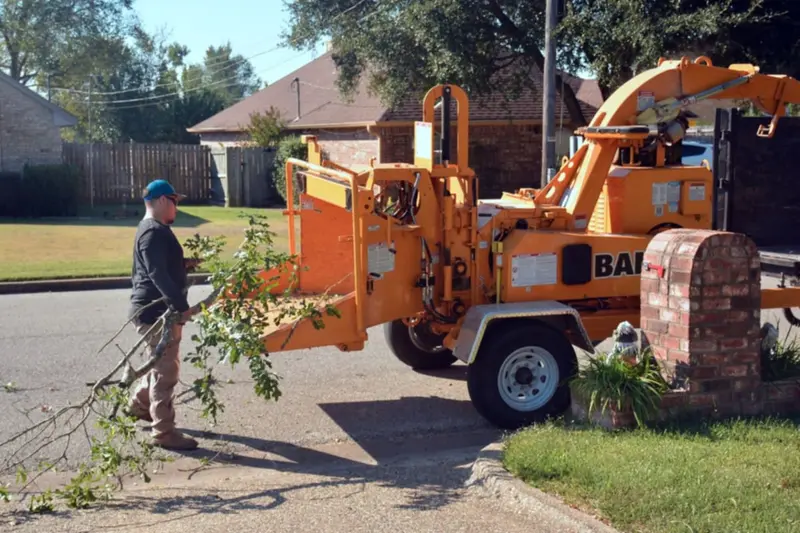
Why it matters who you hire
Tree trimmers and pruners consistently rank among the occupations with the highest fatal injury rates in federal workplace data. Falls, falling wood, chainsaws, chippers and electrical contact all play a part. When something goes wrong on a residential job, the damage lands on the homeowner’s roof, cars and lawn, and possibly the homeowner’s finances. A careful, insured, trained crew is worth more than the difference between quotes.
Insurance: the first thing to check
- General liability pays for damage the crew causes to your house, your neighbor’s house, cars, fences and utilities. Large trees over houses call for substantial limits.
- Workers’ compensation covers crew members injured on the job. North Carolina requires it of most employers with three or more employees, but owners of small companies can exempt themselves, so ask who on the crew is covered. An injured worker without coverage may look to the property owner.
- Verify it. Ask the company’s insurance agent to send certificates directly to you, check the dates and call the agent if anything looks off. A photo of an old certificate on a phone proves nothing. It is also fair to ask whether the trucks, chippers and cranes coming to your property carry commercial auto coverage.
Credentials worth looking for
- ISA Certified Arborist: passed the International Society of Arboriculture’s exam and keeps up with continuing education. Ask whether one will be on site, not just on the website.
- Tree Risk Assessment Qualification (TRAQ): additional ISA training in evaluating hazardous trees, valuable for assessments and removal decisions.
- Board Certified Master Arborist: the ISA’s most advanced credential.
- TCIA Accreditation: a company-level program from the Tree Care Industry Association that audits safety, insurance and business practices.
- Line clearance qualification for anyone working near energized power lines.
- A pesticide applicator license from the NC Department of Agriculture for any company that sprays, injects or treats trees.
Companies that follow ANSI A300 for pruning and ANSI Z133 for safety will usually say so in their quotes.
What a good quote includes
A written quote should leave nothing to interpretation:
- Each tree, identified by species and location, and the exact work: removal, the type of pruning or the clearance to be created.
- The method: climbing and rigging, bucket truck or crane, and how the lawn and driveway will be protected.
- Cleanup: what happens to branches, logs, leaves and debris, and what stays behind.
- Stump grinding, if included, with the depth and what happens to the grindings.
- Who handles HOA approval, utility disconnects and any permits.
- The schedule, payment terms and any deposit.
- Responsibility for damage to the property.
The guide to tree removal cost explains how these items move the price.
Red flags
- Recommending topping to make a tree shorter or safer.
- Climbing spikes on trees being pruned, rather than removed; every spike hole is a wound.
- Door-to-door offers after storms, pressure to decide today and out-of-area crews with no local address.
- Cash only, or full payment before the work starts.
- No written quote, or no insurance certificate on request.
- Asking you to sign over insurance benefits directly to the contractor.
- A bid far below the others with no clear explanation of what was left out.
Hiring after a storm
After big storms, legitimate companies are busy and new ones appear overnight. North Carolina’s price gouging law applies during declared states of emergency, and the NC Attorney General’s office takes complaints. Federal rules give you three business days to cancel most sales of $25 or more made at your home. For a tree that is on the house, a reputable company will often do the urgent part first, lifting the weight off so the roof can be tarped, and price the rest once the danger is past; emergency tree removal explains that process.
Questions to ask before you sign
- How long has the company worked in the Triangle, and can you speak with recent customers?
- Who will be on site, and is a certified arborist part of the crew?
- How exactly will the tree come down, and what is the plan if something goes wrong?
- What is included in cleanup, and what will the yard look like when you leave?
- When can the work start, and how long will it take?
- Will climbing spikes be used, and only on trees being removed?
- How will heavy equipment be kept off the lawn, the septic field and tree roots you want to protect?
For advice on whether a tree should come down at all, an arborist tree assessment from someone without a stake in the removal is worth considering. For routine work, tree trimming and tree removal describe what good work looks like, and the tree care guide ties it all together.
Hiring a tree service — common questions
Does North Carolina license tree services?
No. There is no state license for tree removal or pruning, so anyone can start a tree business. Companies that apply pesticides need a license from the NC Department of Agriculture, and voluntary credentials such as ISA certification show training.
What insurance should a tree company carry?
General liability, to cover damage to your property and your neighbors', and workers' compensation for its employees. Ask for certificates sent directly by the insurance agent, and call to confirm the policies are current.
Should I pay a deposit for tree work?
A modest deposit for large or crane jobs is common, but full payment should wait until the work and cleanup are finished. Be wary of anyone who wants cash up front, especially after a storm.
How many quotes should I get?
Two or three for most jobs. Compare the scope line by line, not just the totals, because quotes often differ in cleanup, stump grinding, removal method and the qualifications of the crew.
More tree care guides
Want a tree looked at?
Call and describe the tree and what you want done, or send the details and we will follow up.