Tree dropping branches: causes and when to worry
A few dead twigs after a windy day are normal. Large limbs falling on calm days, green twigs with clean-cut ends, or a steady shower of deadwood from one tree each point to a different cause.
What you may notice
- Dead branches falling on calm days
- Green twigs on the ground with neatly cut ends
- A large limb that broke off without a storm
- Crusty or peeling patches on the bark of fallen wood
- Thinning leaves or dieback in the crown
Tell us about the tree
Pruned to standard
Cuts made outside the branch collar, no topping and no more removed than the tree can spare, following ANSI A300 pruning standards.
Insured crews, safe rigging
Liability and workers compensation coverage, and limbs lowered on ropes rather than dropped when a roof, fence or garden is below.
A written, itemized price
Removal, stump grinding and cleanup priced separately in writing, so you know exactly what is included before work starts.
Small twigs: usually harmless
Trees shed twigs constantly. Shaded inner and lower branches die as the crown grows over them, and a breezy day brings them down. Pines shed their old, shaded lower limbs as they grow taller, which is why mature pines often have long bare trunks with a crown only at the top. In drought, some trees, oaks among them, drop small twigs to cut their water use. Squirrels clip the tips of oak and pine branches to reach buds, cones and acorns, leaving small green twigs scattered across the lawn, especially in spring and fall.
Twig-cutting beetles
Two native beetles cause a lot of confusion in Triangle yards:
- Twig pruners lay eggs on oak, hickory and other hardwood twigs. The larvae tunnel through the wood and then cut almost all the way across the branch from the inside, so branches up to about an inch thick fall in summer and fall with a smooth, flat end. The larva is often still inside.
- Twig girdlers chew a neat groove around the outside of twigs on pecans, hickories, persimmons and some other trees in late summer and fall, then lay eggs in the part beyond the groove, which dies and drops.
Both are a nuisance more than a threat to healthy, mature trees. Raking up and destroying the fallen twigs in fall and winter removes the next generation.
Dead limbs from decline or disease
When dead limbs keep coming down from the same tree, the tree may be in decline. Common causes here include drought stress, root damage from construction and root rot. Hypoxylon canker, a fungus that shows up on oaks weakened by drought, leaves patches of crusty material, tan at first and later silver-gray to black, where the bark has sloughed off; by the time it is visible, the wood beneath is often decayed and limbs break easily. Dead limbs scattered through the crown, or dieback at the top, warrant an arborist tree assessment.
Sudden limb drop
Occasionally a large limb that looks healthy breaks off on a hot, still summer day with no wind at all. Arborists call it sudden limb drop or summer branch drop. The exact mechanism is still debated, but long, heavy, horizontal limbs, often on mature oaks, are the typical victims. Reducing the length and end weight of such limbs with careful tree trimming lowers the risk, and it is one more reason not to linger under a big limb on a sweltering afternoon.
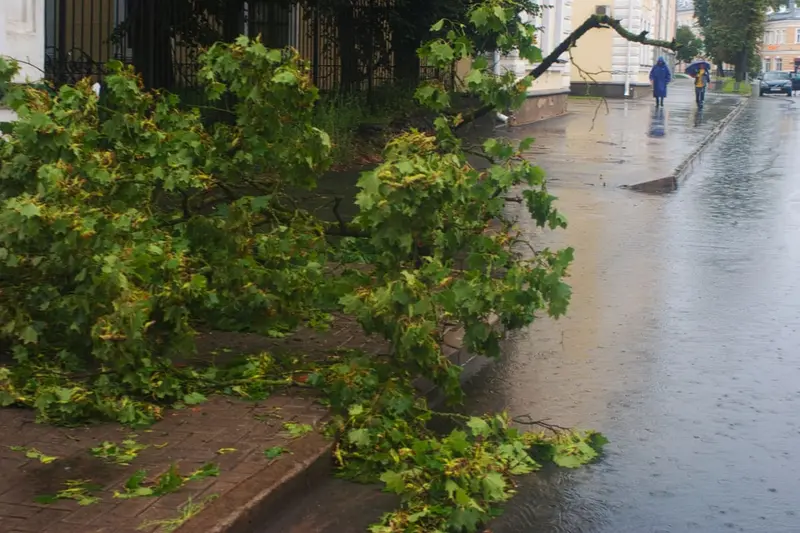
Limbs that break in wind
Branches that fail in ordinary storms usually had a weakness: a V-shaped fork with bark trapped between the stems, decay at the attachment, heavy sprouts from an old topping cut, or a long limb with all its foliage at the end. Look at the broken end. Dark, punky or hollow wood at the break means decay, and the tree likely has more of it. Clean, bright wood suggests a structural flaw that the rest of the crown may share. Fast-growing, weak-wooded species such as Bradford pears, silver maples and water oaks drop limbs more readily than white oaks and hickories.
Which branches need attention
- Dead limbs over the house, driveway, deck or play areas should come out; tree limb removal handles those over roofs.
- Hangers, broken limbs caught in the crown, need removing promptly.
- Long, heavy limbs on mature trees benefit from end-weight reduction.
- Recurring deadwood from one tree calls for a look at its overall health.
Crown cleaning, which removes deadwood throughout the crown every few years, keeps most mature trees from dropping limbs where people are. Deadwood can come out at any time of year; the guide to when to prune trees covers timing for live branches.
Tree dropping branches — common questions
Why are green branches falling from my oak tree?
If the ends look cleanly cut, the likely culprits are twig pruner or twig girdler beetles, whose larvae sever small branches, or squirrels clipping twigs. These are mostly a nuisance to rake up. Green limbs with splintered, broken ends are worth a closer look.
What is sudden limb drop?
A large, apparently healthy limb breaking off on a hot, calm day, often in the afternoon. The cause is not fully understood, but long, heavy, horizontal limbs are the usual victims, and shortening them lowers the risk.
Should I worry if my tree drops dead branches?
A few small dead twigs are normal. Dead limbs more than a few inches across, or a steady increase in deadwood, suggest a tree in decline or with decay, and dead limbs over the house, driveway or play areas should come out.
Other tree problems
Not sure whether the tree is safe?
Call and describe the tree and what is near it, or send a few details and we will get back to you.