Vines and ivy on trees: what to remove and how
Most vines do not feed on trees, but the heaviest ones shade out leaves, add weight and wind resistance, and can strangle a trunk. Removing them the right way protects both the tree and you.
What you may notice
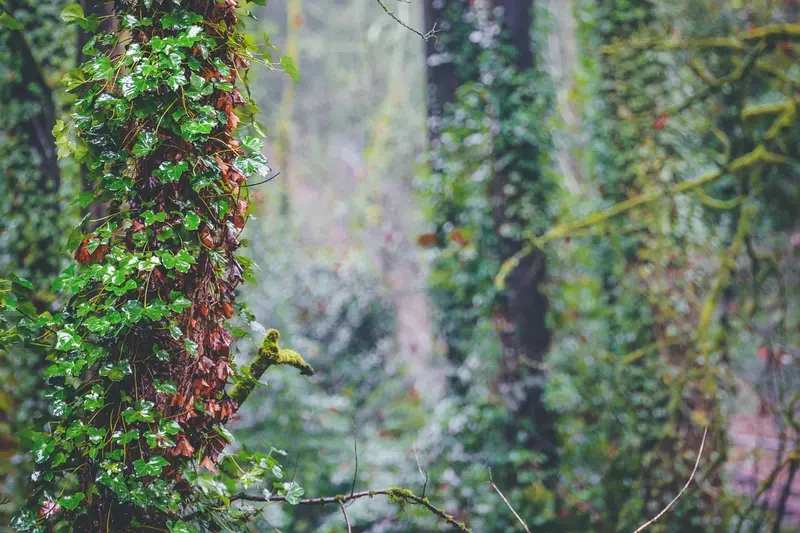
- Ivy covering the trunk and climbing into the crown
- Thick, woody vines twisting around the trunk or limbs
- Leaves high in the crown that belong to the vine, not the tree
- Bark pinched or swollen where a vine wraps it
- A tree leaning or top-heavy under a mass of vines
Tell us about the tree
Pruned to standard
Cuts made outside the branch collar, no topping and no more removed than the tree can spare, following ANSI A300 pruning standards.
Insured crews, safe rigging
Liability and workers compensation coverage, and limbs lowered on ropes rather than dropped when a roof, fence or garden is below.
A written, itemized price
Removal, stump grinding and cleanup priced separately in writing, so you know exactly what is included before work starts.
Which vines cause the most harm
- English ivy: an evergreen invasive that covers trunks and eventually climbs into the crown. Once it reaches the light, it changes to a shrubby adult form that flowers and sets berries, which birds carry into new woods.
- Chinese and Japanese wisteria: heavy, woody vines that twine tightly around trunks and limbs, girdling them as both grow, and can pull down or smother whole trees.
- Oriental bittersweet and Japanese honeysuckle: twining invasives that wrap young trees and shrubs and constrict their stems.
- Kudzu: less common in neighborhoods, but able to blanket trees completely along wooded edges and roadsides.
- Native vines: poison ivy, Virginia creeper, muscadine grape and trumpet creeper climb trees too. They belong in a healthy woodland, but big ones on yard trees add weight and shade, and poison ivy is a hazard to anyone working nearby.
How vines harm trees
Vines that stay low on the trunk do little damage, but vines in the crown compete with the tree’s own leaves for sunlight. Evergreen ivy keeps its leaves all winter, so a vine-covered tree catches wind and ice like a sail at a time of year when its own leaves are gone. Twining vines tighten as the tree grows, choking off the flow of water and sugars under the bark. And a thick mat of vines hides cracks, cavities and fungi from anyone trying to judge whether the tree is safe.
The survival ring: removing ivy from a tree
Extension services and conservation groups recommend a simple method for ivy:
- Cut every vine around the trunk at about shoulder height with loppers or a hand saw, without cutting into the bark.
- Cut each vine again near the ground.
- Peel away the section between the cuts, and pull the ivy out of the ground in a ring three to six feet around the trunk.
- Leave the ivy above the cuts alone. Separated from its roots, it dies within weeks and falls away over time.
- Check the ring a few times a year and cut new vines before they climb.
Wisteria and other woody vines
Big wisteria and bittersweet vines take more work. Cut each vine at the base and again a few feet up, free any stems girdling the trunk where that can be done without injuring the bark, and treat the cut stumps with an herbicide labeled for the purpose, following the label, or the roots will resprout vigorously. Vines high in the crown are best left to die and then removed with routine tree trimming, when a climber can bring dead tangles down safely.
Poison ivy on trees
Hairy, rope-like vines climbing a trunk are usually poison ivy. Its leaves, vines and roots all contain urushiol, the oil that causes the rash, and it stays active on dead vines, tools and gloves for a long time. Wear gloves, long sleeves and eye protection, wash tools and clothing afterward, and never burn the cuttings. Old vines can be cut at the base and left to die on the tree.
Clearing overgrown areas
When vines have taken over a wooded edge or a back lot, the job is bigger than a few trunks. Land clearing removes invasive vines and brush while keeping the trees worth saving, and the cleared ground should be replanted or mulched so the invasives do not simply return. Cutting the vines off the trees first, then clearing beneath them, gives the trees the best chance of recovering. Where ivy also carpets the ground, a thick layer of mulch or a dense planting of native groundcover after removal keeps it from creeping back toward the trunks.
Vines on trees — common questions
Does ivy kill trees?
Not directly; English ivy clings to bark rather than feeding on the tree. But ivy that climbs into the crown competes for light, adds heavy weight and wind resistance, and hides decay, so heavily covered trees are more likely to break or blow over.
Should I pull the ivy down from the tree?
No. Cut the vines near the ground and again at about shoulder height, remove the section between, and let the upper ivy die and fall away on its own. Pulling it down can tear bark and bring dead wood down with it.
Is it safe to cut poison ivy vines on a tree?
Only with gloves, long sleeves and eye protection, because every part of the plant, even dead vines, contains the oil that causes the rash. Never burn poison ivy; the smoke can cause serious reactions in the lungs.
Will the vines come back?
Often, from roots and seeds, so plan on cutting or treating regrowth for a season or two. Keeping a cleared ring around the base of each tree makes new vines easy to spot.
Other tree problems
Not sure whether the tree is safe?
Call and describe the tree and what is near it, or send a few details and we will get back to you.